
If you built your testing habit around Google Optimize, you already know the problem. Google shut it down years ago, and a lot of small teams never fully replaced it. They just stopped running A/B tests. That is a bad trade. You do not need Google's tool back. You need a plan for where testing lives now, and a realistic sense of what actually earns the effort.
Why so many teams stalled out
Google Optimize was free, and it plugged directly into Google Analytics. That combination made it the default choice for years, even for teams that never used more than a fraction of its features. When it disappeared, most of the paid alternatives looked expensive by comparison, and migrating a test suite is not a fun weekend project. So testing quietly stopped at a lot of companies, not because anyone decided it was a bad idea, but because nobody got around to picking a replacement.
If that is your situation, the good news is that the market has settled. There are clear options depending on your budget and your team size, and none of them require you to rebuild your entire analytics stack from scratch.
Where to actually run tests now
For teams that want an enterprise-grade replacement, Optimizely and VWO are the two most direct successors. Both offer visual editors, server-side testing, and solid statistical engines. They are not cheap, and pricing is usually custom quoted, so expect a sales conversation before you see a number. If you have the budget and the traffic volume to justify it, either is a safe choice.
For smaller teams or leaner budgets, AB Tasty and Convert sit in a more accessible middle tier, with visual editors that do not require a developer for every change. If your team is comfortable writing a bit of code and wants to avoid subscription costs altogether, GrowthBook is open source and has become a popular choice for engineering-led teams that want feature flags and experimentation in one place.
One thing worth saying plainly: if your site gets under a few thousand visitors a month, formal A/B testing tools may not be worth the cost at all. You need enough traffic to reach statistical significance in a reasonable time frame. Below that threshold, your energy is often better spent elsewhere, which brings up the real gap Google Optimize left behind.
The bigger question Optimize never answered
Here is the thing most teams forget when they focus only on replacing the testing tool. A/B testing tells you which version won. It does not tell you why. You can run a perfectly valid test, see that version B converts 12% better, and still have no idea what specifically made the difference. Was it the headline? The button color? The fact that version B loaded half a second faster? Without that context, you cannot apply the lesson anywhere else on your site.
A test result without a reason behind it is a coin flip you happened to win. You cannot repeat a coin flip on purpose.
This is where session replay and heatmaps earn their place next to whatever testing tool you pick. Watching real visitors move through both versions of a page shows you the mechanism behind the number, not just the outcome. Maybe people on version B scrolled further before bouncing. Maybe they hesitated over a form field that version A did not have. That kind of detail is what turns one winning test into a repeatable pattern you can apply across your site.
A practical way to rebuild the habit
If testing has been dormant since Optimize shut down, do not try to relaunch a full experimentation program overnight. Start smaller than you think you need to.
- Pick one high-traffic page, usually your pricing page or your main landing page.
- Form a single hypothesis based on something you have already observed, like a heatmap showing visitors ignoring your call to action.
- Run one test at a time with a clear success metric decided before you launch it.
- Watch a handful of session recordings from each variant while the test runs, not just after it ends.
- Only add a second concurrent test once the first one is done and documented.
This slower approach rebuilds the muscle without overwhelming a team that has been out of practice. It also means every test produces a lesson you can reuse, instead of a number you file away and forget.
Make the data work together
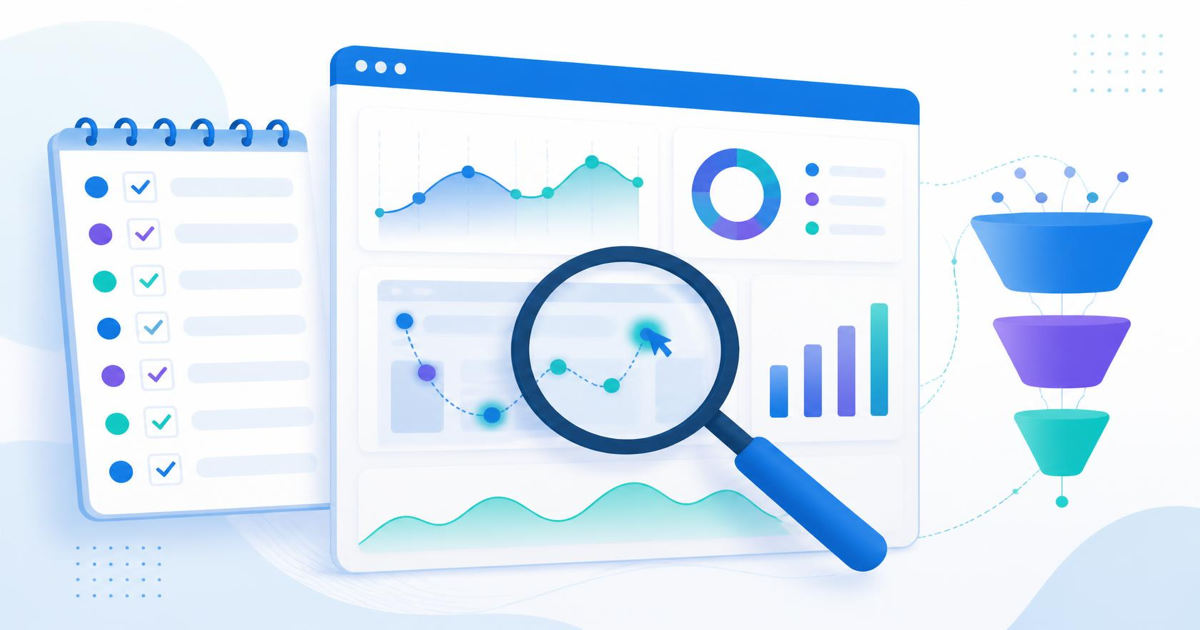
The teams that get the most out of testing treat it as one part of a loop, not a standalone tool. Analytics tells you where to look. Heatmaps and session replay tell you what is actually happening on the page. The A/B test confirms whether your fix worked. Skip any one of those steps and you are guessing at two of the three.
This is part of why LeadFnF pairs session replay and heatmaps with real-time analytics in one lightweight script instead of forcing you to stitch together three separate tools. When you notice a drop-off in a funnel, you can watch the actual sessions where it happened before you even write your test hypothesis. That saves you from testing changes based on a hunch when the real answer was sitting in a recording the whole time.
Google Optimize going away was an inconvenience, not a reason to stop learning from your visitors. Pick a testing tool that fits your size and budget, pair it with a way to see what your visitors are actually doing, and you will get more out of every test you run than Optimize ever gave you on its own.
Want to see where your visitors are actually getting stuck before you write your next test? Start a free trial with LeadFnF and watch the sessions behind the numbers.