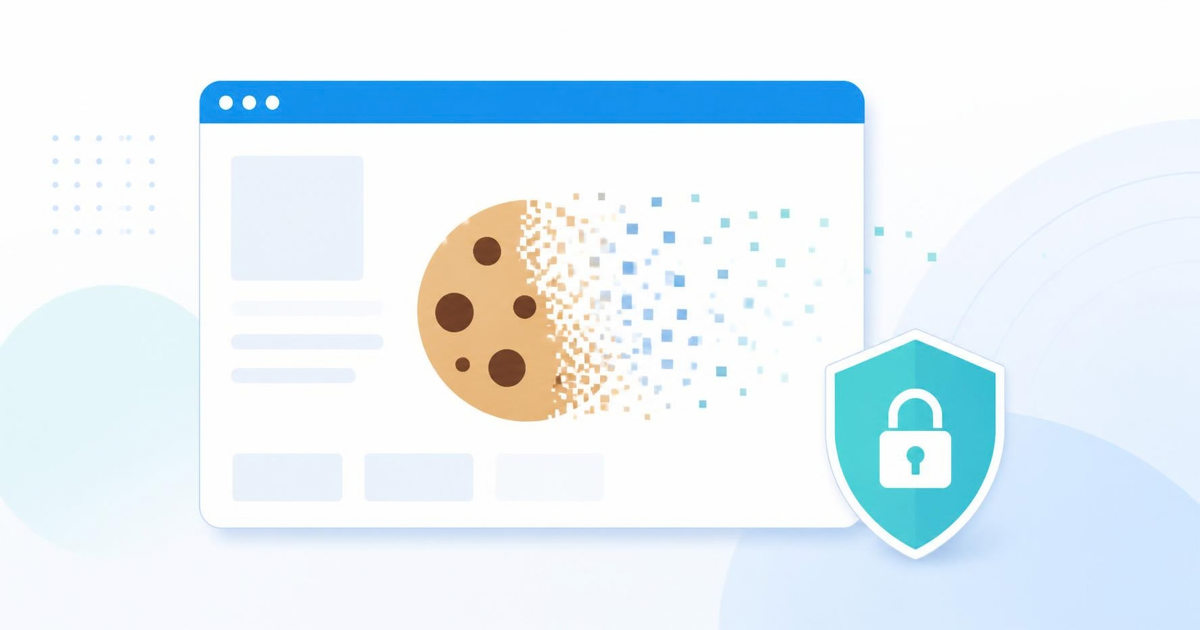
Third-party cookies are not disappearing overnight, but they are already unreliable, and building your analytics around them in 2026 is a bet you don't need to make. Safari and Firefox block them by default. Chrome now lets users opt out through its Privacy Sandbox settings, and a growing share do. If your site still depends on third-party cookies to understand visitors, you are already flying blind for a meaningful chunk of your traffic. Here is what actually changed, why it still matters even after Google's reversal, and what small sites should do about it now.
What Actually Happened to Third-Party Cookies
Google spent years promising to kill third-party cookies in Chrome, then walked it back in 2025 after developer pushback and regulatory pressure from the UK's Competition and Markets Authority. Instead of a hard deadline, Chrome now offers users a clear choice to block third-party cookies, and Google has been quietly nudging that toggle into more places. The Privacy Sandbox APIs that were meant to replace cookie-based tracking never got full adoption either.
The result is a messier middle ground than anyone expected. Safari and Firefox already block third-party cookies by default and have for years. Chrome, still the majority browser, now sits at a growing opt-out rate rather than a full ban. Add browser extensions, ad blockers, and privacy-focused mobile browsers, and a large slice of your visitors were never being tracked accurately in the first place.
Why This Still Matters for Small Sites in 2026
It's tempting to read "Google backed off" as "nothing changed, ignore this." That would be a mistake. The direction of travel has been consistent for a decade: less third-party tracking, more user control, more browsers shipping privacy defaults out of the box. Waiting for a single dramatic cutoff date means you keep making decisions on data that is already partially wrong today.
For a small business, this shows up in quiet ways. Your attribution reports undercount certain channels. Retargeting audiences shrink without an obvious cause. Cross-domain tracking between your marketing site and app quietly breaks for a subset of users. None of it throws an error. It just makes your numbers slightly, consistently wrong, which is worse than an outright failure because nobody notices.
The sites that get hurt aren't the ones ignoring privacy trends. They're the ones who built their entire measurement stack on a foundation that was already crumbling and never checked.
What Breaks When Third-Party Cookies Go Away
A few specific things fail first, and it's worth knowing which ones apply to you:
- Cross-site retargeting. Ad platforms that rely on third-party cookies to follow a visitor from your site to a social feed or another publisher lose accuracy fast.
- Multi-domain analytics. If your marketing site and your app or checkout live on different domains, cookie-based session stitching between them degrades.
- Long attribution windows. A 30 or 90-day cookie-based attribution model assumes the cookie survives that long. Browser cookie-blocking and auto-expiry rules mean it often doesn't.
- Third-party embedded widgets. Chat widgets, some heatmap tools, and ad pixels that set cookies from a different domain than your own are the first to get blocked.
Notice what's not on that list: first-party analytics that runs on your own domain, sets its own first-party cookie or uses cookieless identifiers, and doesn't depend on cross-site tracking to function. That's the category worth moving toward.
The First-Party Data Move Most Small Teams Skip
Most small teams know they should "collect first-party data" in the abstract, but the phrase is vague enough to be ignorable. In practice it means three concrete things: your analytics script should run from your own domain, your session and event data should be tied to a first-party identifier rather than a synced third-party one, and you should own the raw data rather than renting access to it through someone else's dashboard.
This is exactly the gap privacy-first analytics tools were built to close. A single lightweight script, served from your own site, recording sessions and building funnels without depending on third-party cookies to stitch anything together. LeadFnF works this way by design: one script under 3KB, session replay and heatmaps that run first-party, and no dependency on cross-site cookies to tell you where a visitor came from or where they got stuck. You're not betting your measurement on a browser policy that keeps changing.
A Practical Checklist for the Next 30 Days
You don't need a six-month migration plan to get ahead of this. Start with a short audit:
- List every tool on your site that sets a cookie, and check whether it's first-party or third-party (most browser dev tools show this under Application > Cookies).
- Flag any tool whose core function depends on cross-domain tracking, like retargeting pixels or embedded widgets from another domain.
- Compare your analytics numbers against server logs or a first-party tool for a week. A gap bigger than 10-15% usually means cookie blocking is already skewing your data.
- Move session recording, heatmaps, and funnel tracking to a first-party tool if you haven't already, since these are the easiest to fix and the most valuable for understanding actual visitor behavior.
- Keep retargeting and ad tools in place, but treat their numbers as directional rather than exact, since that's the layer most exposed to further browser changes.
None of this requires a developer sprint. Most of it is an afternoon of checking your own site and swapping one or two scripts.
The Bottom Line
Third-party cookies didn't die on schedule, but they've been fading for years and that trend hasn't reversed. Small sites that keep their core analytics on first-party foundations won't need to care much when the next browser update tightens the screws further. The ones still leaning on third-party tracking will keep quietly losing visibility, one browser update at a time, until the gap in their data is too big to explain away.
If you want to see what your traffic actually looks like without depending on third-party cookies, start a free LeadFnF trial and watch your first sessions come in within minutes.