Privacy-first marketing sounds like a contradiction to a lot of teams. Marketing runs on data: who came from which channel, what they clicked, where they dropped off. Privacy runs on restraint: collect less, identify less, store less. The good news is these two goals are not actually in conflict. You can measure almost everything that matters to a marketing team without ever building a profile of an individual visitor. The trick is knowing which numbers were always the wrong ones to chase.
What "tracking people" actually means
Most teams use "tracking" and "analytics" interchangeably, but they describe two different practices. Tracking means stitching together a persistent identity for a visitor: a cookie, a device fingerprint, a hashed email, a cross-site pixel that follows them from your site to five others. Analytics, in the privacy-first sense, means counting events and aggregating patterns without needing to know who did them.
A pageview count does not require identity. A conversion rate does not require identity. A funnel drop-off percentage does not require identity. What requires identity is retargeting, cohort tracking across sessions and devices, and any dashboard that lets you click into "this specific person's journey." Most marketing decisions never actually need that last category, they just inherited it because tools like GA3 and older ad pixels defaulted to collecting it.
The metrics that still tell you the whole story
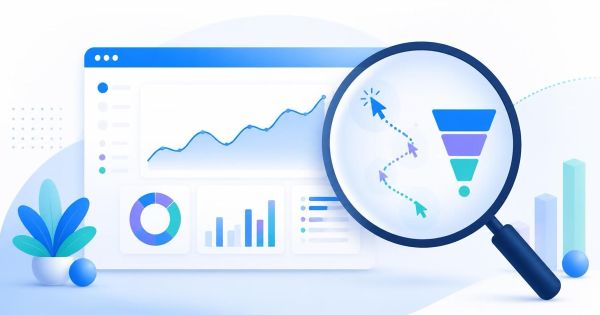
Strip identity out of the equation and you are left with a shorter, sharper list of numbers: traffic by source and campaign, bounce rate by landing page, conversion rate by funnel step, time on page, scroll depth, and referrer data. None of these require a cookie that persists across sessions. Server-side or first-party, cookieless measurement can capture all of them using a session-scoped identifier that resets and is never linked back to a real person.
The metrics you lose are the ones that were arguably vanity anyway: lifetime visit counts tied to one browser, cross-device stitching, and granular ad retargeting audiences. Teams that make the switch usually find they were building dashboards around those numbers because the tools offered them, not because a campaign decision ever hinged on them.
Aggregate behavior data without a name attached
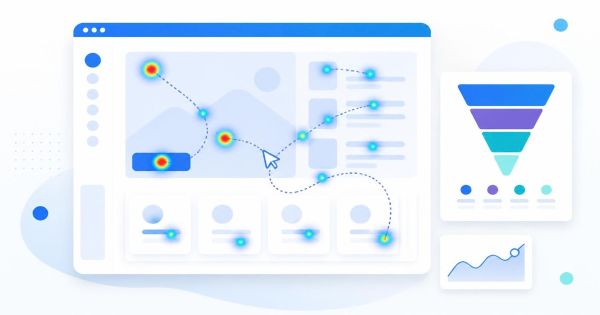
Heatmaps and session replay get an unfair reputation in privacy conversations because early tools recorded everything, including form field keystrokes, by default. Done properly, both are aggregate or anonymized by design. A heatmap is a statistical overlay built from hundreds of anonymous sessions, it was never about any one visitor. Session replay, when it masks sensitive inputs automatically and does not tie recordings to an email address or account ID, shows you behavior patterns rather than personal data.
This is where LeadFnF's approach comes in. The platform runs session replay and heatmaps from a single lightweight script, under 3KB, that captures interaction patterns in real time without setting cross-site cookies or building advertising profiles. You get to watch where visitors hesitate on a pricing page or where a form loses people, the same insight a heavier, identity-based tool would give you, without the compliance overhead that comes with storing personal data long term.
The goal was never to know who your visitors are. It was to know what your site is doing to them.
Funnels that show the leak, not the person
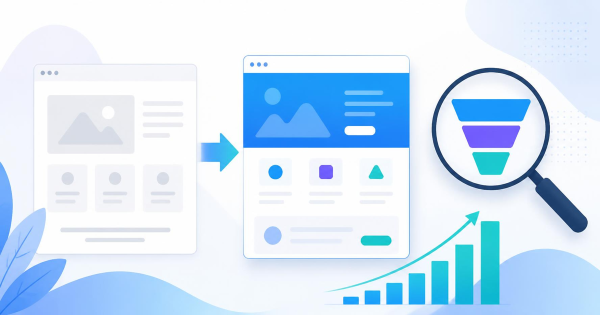
A conversion funnel is one of the most useful privacy-friendly reports in marketing, because it is inherently aggregate. You define the steps: landing page, product page, cart, checkout, confirmation, and the tool reports the percentage that makes it through each one. Nothing about that requires knowing which specific visitor dropped off at step three, only that some percentage did.
Real-time funnel data adds one more layer of value without adding any privacy risk. If a checkout step suddenly drops from an 80% completion rate to 40% right after a deploy, you want to know within the hour, not at the end of the month when someone finally pulls a report. Watching funnels update live lets a team catch a broken payment field or a mistranslated button before it costs a week of lost signups, and it does that with the same anonymized, step-based data a monthly report would use.
Building a consent-friendly measurement stack
The practical path most small and mid-size sites take looks like this: replace long-lived third-party cookies with short-lived, first-party session identifiers. Choose an analytics tool that does not require a cookie consent banner because it never stores personal data in the first place. Turn on input masking by default for any session replay tool, so passwords, card numbers, and personal fields are never captured. Keep raw event data for weeks, not years, since marketing decisions rarely benefit from data older than a quarter anyway.
None of this requires giving up granularity. You still get source attribution, funnel breakdowns, heatmaps, and live behavior data. You just stop building a permanent file on each visitor to get it. For teams that have been putting off a proper GDPR or CCPA review, switching to this kind of stack often solves the compliance question and the "our dashboards are too bloated to act on" problem at the same time.
What to change first
If you are auditing your current setup, start with whatever tool sets the longest-lived cookie on your site and ask what it is actually being used for. In most cases the honest answer is retargeting or cross-session identity stitching, neither of which is required for the reports your team looks at weekly. Swap that layer out first, keep the reports that were already aggregate, and you will likely find the "privacy-first" version of your stack tells you just as much as the old one did.
LeadFnF was built around that exact idea: real-time session replay, heatmaps, and funnels from one small script, with privacy as the default setting rather than an add-on toggle. If your team wants to see what a marketing dashboard looks like without a name attached to any of it, start a free trial and watch your own funnels update as visitors move through them today.