
A shopper adds an item to their cart, opens checkout, and then simply vanishes. No error message, no complaint, no email to support. They are just gone, and your analytics shows only that a session ended. This single moment, quiet as it is, is where most online stores lose the most money they will ever lose.
Cart and checkout abandonment is not a mystery you have to accept. It is a problem you can actually watch happen, step by step, if you know where to look.
The scale of the problem is bigger than most owners think
Across ecommerce, roughly seven out of ten checkouts are abandoned before payment completes. That is not a niche issue affecting a few stores with bad design. It is the default outcome for most checkout flows, including ones that look perfectly fine to the person who built them. The gap between "looks fine to us" and "works for a stranger buying at 11pm on their phone" is exactly where abandonment lives.
Your checkout funnel tells you where, but not why
A conversion funnel is the first tool worth setting up, and most stores already have something like it. It shows you the shape of the drop-off: how many people view the cart, how many start checkout, how many enter payment details, how many finish. If 40 percent of your checkout starts never reach payment, the funnel makes that visible in a way a single "conversion rate" number never could.
What a funnel cannot do is tell you why that 40 percent left. Did the shipping cost surprise them? Did a required field throw an error they didn't understand? Did the page freeze for two seconds on a slow connection and they assumed it was broken? The funnel points at the step. Finding the reason takes a different kind of tool.
Session replay turns the drop-off step into something you can watch
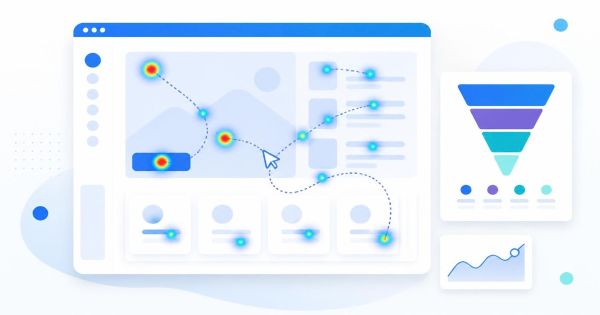
Session replay records a visitor's actual behavior on the page: where the cursor moves, which fields get clicked, where scrolling stops, where a rage click happens because a button did not respond. Once you know which checkout step loses the most people, you can filter recordings down to exactly the sessions that stopped there, and watch a handful of them back to back.
This is usually where the real answer shows up. A shipping field that only accepts a format nobody explains. A discount code box that invites people to go hunting for a coupon and never come back. A total that jumps up unexpectedly at the last step because tax or shipping was hidden until then. None of these show up in a spreadsheet. All of them show up in five minutes of watching real sessions.
A funnel tells you that people left at checkout. A recording shows you the exact second they decided to.
Heatmaps catch the problems that repeat across everyone
Individual recordings are powerful but slow to review one at a time. Heatmaps solve the other half of the problem by showing you where attention and clicks land across every visitor at once. On a checkout page, this usually reveals things like a "place order" button that people hesitate near but do not press, or trust badges and return policy links that go completely unclicked because they are buried below the fold where nobody scrolls on mobile.
Used together, a heatmap tells you what is happening at scale, and a handful of recordings tell you why it is happening to any one visitor. That combination is usually enough to build a short, specific list of fixes instead of a vague sense that "checkout could be better."
Common checkout killers worth checking first
- Shipping costs or taxes that only appear on the final step, not the cart
- Account creation required before a guest can even see the total
- Form validation that rejects valid input, such as phone numbers or postcodes in unexpected formats
- Payment fields that are slow to load or briefly unresponsive on mobile
- Too many steps between cart and confirmation, each one a fresh chance to lose someone
You do not need to fix all of these at once. Pick the step where your funnel shows the largest drop, watch a few recordings of people who left there, fix the specific thing you see, and measure the same step again the following week. Small, evidenced changes compound faster than a full redesign based on guesswork.
Bringing it together
Checkout abandonment feels unsolvable mainly because most stores only have half the picture: the numbers, without the moments behind them. A funnel shows you where people leave. Session replay and heatmaps show you why. Together they turn "we lose 70 percent of checkouts" from a discouraging statistic into a short list of specific, fixable problems.
LeadFnF brings funnels, session replay, and heatmaps together from a single lightweight script, so you can watch your own checkout the same way described here, no separate tools or logins required. Start a free 14 day trial and see exactly where your next checkout is losing people.